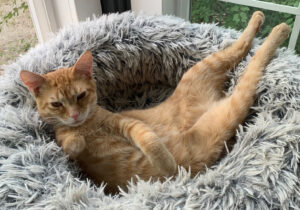
Three-legged Cats
The Pet Paw-see has taken in numerous three-legged cats over the years. Most of the causes for losing a limb are due to being hit by vehicles or being caught in a trap. Once in a while we get a kitty that was born missing a limb.
The loss of a limb affects normal feline behaviors such as running, walking, jumping and climbing. Everyday activities like grooming and digging will require more effort. Yes, cats do usually find ways to adapt, but it’s sometimes a difficult transition. Angst and anxiety may make them feel insecure. They must learn different ways to perform certain tasks.
Caring for an Amputee Cat After Surgery
While recovery times vary according to the type of amputation, expect to provide lots of supervision and care. Monitor your cat’s movements carefully and start slowly with short periods of freedom on non-slick surfaces like carpet. Offer your tripod cat a low-sided litter box that will provide easier access. Richter also recommends using a newspaper-based litter, which is less likely to stick to the incision site and cause infection.
Exercise is Extra Important for Tripod Cats
While keeping the pounds off is important for four-legged felines, it’s crucial for tripod cats. Core strengthening is the key to keeping three-legged cats strong. Try using a feather wand to encourage your cat to engage in meerkat-style moves. Balance discs or wobble boards can help, too.
Adapting Your Home for a Three-Legged Cat
- Pave the road to your cat’s recovery with carpet runners or other non-slick surfaces on areas your cat likes to travel.
- Block off access to high-up cabinets or bookcases. Cats don’t always land on all fours (or threes), and tripods are at risk for additional injuries.
- If possible, move furniture accordingly to help her get around, or adjust perches to a more accessible height. Some pet parents get creative in how they adapt their homes for their three-legged cats.
Considering Adopting an Amputee Cat?
If you have pets already, taking on a tripod cat shouldn’t affect them much, since their needs and activity levels are fairly similar to those of four-legged felines. Amputee animals often get overlooked at the shelters because people see them as “special-needs.”
How to Care for a Three-Legged Cat
- It’s important to keep your three-legged cat indoors only. Predators, cars and more are dangers for all cats who go outside — and tripods will have an even harder time escaping from those hazards.
- Limit movement and supervise or crate your tripod for the first month after surgery to protect her from additional injuries.
- Block off high areas in your home where your cat likes to jump. Make perches more accessible by adding steps or moving furniture.
- Provide a litter box that’s low to the ground.
- Use newspaper-based litter for the first two weeks after surgery.
Article from: Catster © 2019 Belvoir Media Group. All rights reserved